
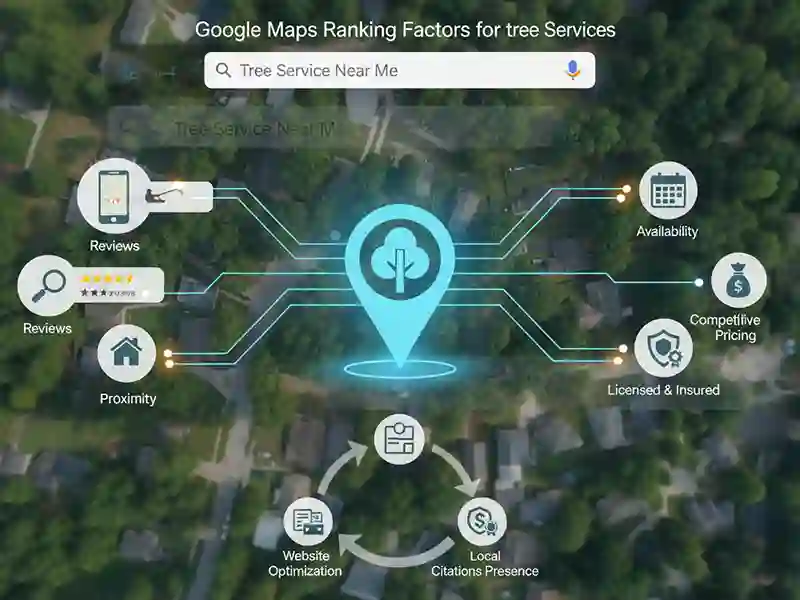
Google Maps ranking factors for tree services are the specific things Google looks at to decide which three tree companies show up in that map pack at the top of search results. Distance from the searcher matters. Review count and ratings matter. How complete your profile is matters. How often people click on your listing, call you, or visit your website matters.
Most tree company owners think Google just picks randomly or that it’s all about who pays the most. It’s not. Google has a clear system. If you understand what Google’s looking for and you optimize for those specific factors, you can rank in that top three consistently. That’s where the calls come from.
We’ve spent ten years figuring out exactly what moves the needle for tree service companies specifically. Not restaurants. Not plumbers. Tree services. The factors are the same across industries but how you optimize them is different for tree work.
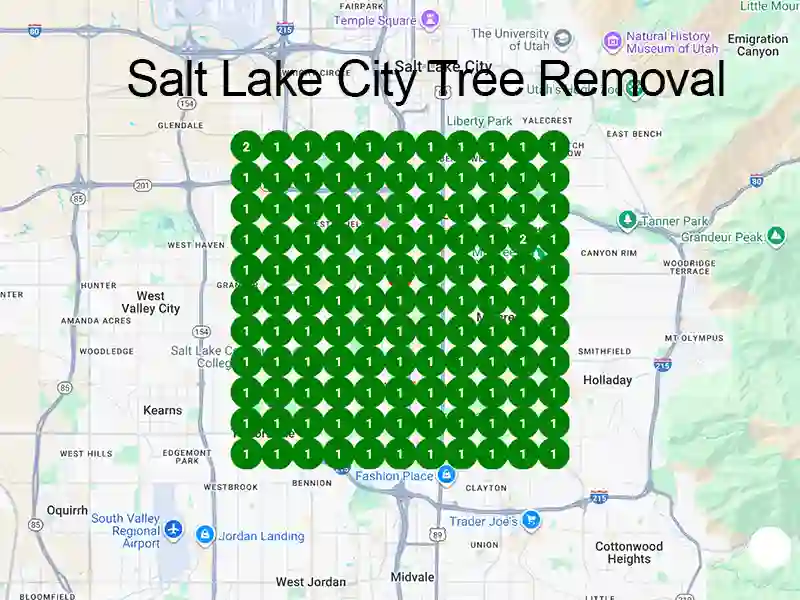
When someone searches “tree removal near me” or “tree service” plus their city, Google shows three businesses in the map pack before anything else. Those three businesses get most of the clicks. Most of the calls. Most of the jobs.
Studies show the first result in the map pack gets clicked about 30% of the time. Second place gets maybe 15%. Third gets 10%. Everything below that, the businesses that show up when you click “more results,” they’re fighting over scraps.
We tracked this for a client in Utah. When they were ranking seventh in his area, they got maybe three calls a week from Google. We got them into the top three and his calls jumped to 12-15 per week. Same business. Same services. Same reviews. Just different ranking position. That’s the difference between struggling and being fully booked.
The other thing is these are free clicks. You’re not paying per call like with Google Ads. Once you rank well in Maps, you’re getting leads on autopilot without paying for each one.
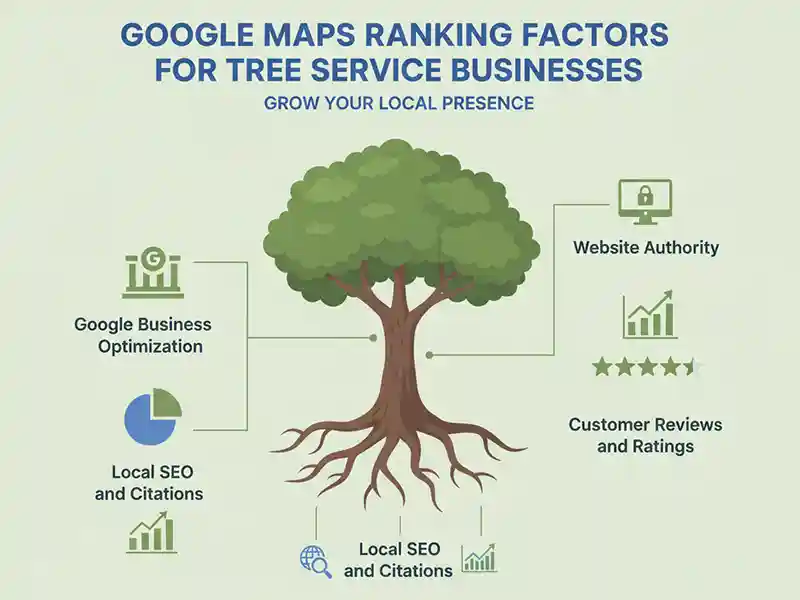
Google has confirmed three main categories that affect Maps rankings. Relevance, distance, and prominence. Everything else falls under one of those three.
This one sounds obvious but most tree companies mess it up. Relevance means how well your Google Business Profile matches what someone’s searching for.
If someone searches “emergency tree removal” and your business categories include “Tree Service” and “Arborist” but you never mention emergency work anywhere on your profile, Google doesn’t think you’re that relevant. Even if you do emergency work every day.
You control relevance through your business categories, your services list, and your business description. Pick the right primary category. For most tree companies that’s “Tree Service” or “Arborist.” Then add secondary categories that are actually relevant. “Logging Contractor” if you do land clearing. “Stump Grinding Service” if that’s a big part of your business.
List out your actual services in the services section. Tree removal. Tree trimming. Stump grinding. Emergency storm cleanup. Lot clearing. Whatever you actually do. Be specific. The more services you list that match what people search for, the more relevant Google thinks you are.
Your business description needs to include the words people actually type into Google. Not fancy language. Just clear descriptions. “We provide tree removal, tree trimming, stump grinding, and emergency tree services in Portland and surrounding areas.” That covers the main searches and tells Google exactly what you do.
Most tree companies write descriptions like “Family-owned business providing quality arboriculture services since 1995.” Nobody searches for arboriculture services. They search for tree removal. Use the words customers use.
You can’t change your physical location obviously. But you can optimize for distance in ways most tree companies don’t think about.
First, your address needs to be correct and specific. If you work from home, use your home address. If you have a shop, use that. Don’t use a PO box. Google wants a real physical location.
Your service area is huge for tree companies. Most of you don’t just serve one city. You cover multiple towns. Set your service area to include everywhere you actually work. If you’ll drive 30 miles for a job, set a 30-mile radius. If you serve specific cities, list those cities.
We had a client who only listed his home city in his service area even though he regularly worked in five surrounding towns. He wasn’t showing up for searches in those other towns because Google didn’t know he served them. We expanded his service area and he started ranking in all five towns within two weeks.
Here’s something most people don’t know. If you have multiple crews or multiple locations, you can create separate Google Business Profiles for each location. We set up a second profile for a client who had a storage yard in a different city from his main office. Both profiles rank now and he gets leads from both areas.
The closer you are to the person searching, the better you’ll rank. But you maximize your chances by making sure Google knows exactly where you are and where you serve.
This is the big one. Prominence is basically Google’s way of measuring how legitimate and popular your business is. It includes your reviews, your backlinks, how often people search for your business by name, citations across the web, and engagement signals.
Review count matters more than rating. A tree company with 80 reviews and a 4.6 rating will usually outrank one with 15 reviews and a perfect 5.0. Google wants to see volume and recency.
You need a system for getting reviews regularly. Not in batches. Regularly. We tell our clients to ask for a review after every job. Not every customer will leave one but if you ask after 20 jobs and get 8 reviews, that’s 8 reviews per month. In six months you have almost 50 reviews. That puts you ahead of most tree companies in your area.
The content of reviews matters too. If ten reviews mention “tree removal” and “fast service” and “cleanup,” Google sees those keywords and associates your business with those terms. That helps your relevance for those searches.
Respond to reviews. All of them. Good ones and bad ones. Thank people for good reviews. Address issues in bad reviews professionally. Google tracks engagement and businesses that respond to reviews tend to rank better.
One of our clients in Utah had 25 reviews when we started working with him. We set up a simple system where he texts customers a review link the day after finishing a job. Eight months later he has 110 reviews. His Maps ranking went from position 8 to position 2. That’s almost entirely because of review growth.
Businesses that regularly add photos and posts to their Google Business Profile rank better than ones that don’t. Google wants to show active businesses, not dead ones.
Post photos of jobs you complete. Before and after shots work great. Crew photos. Equipment photos. Whatever shows you’re actually working. Aim for at least one photo per week. More is better.
Google Posts are underused by tree companies. These are the little updates you can add to your profile. They show up when people look at your listing. Post about seasonal services. Storm prep before winter. Spring pruning specials. Doesn’t have to be elaborate. Just shows Google your business is active.
We tested this with two similar clients in the same city. One posted photos weekly and used Google Posts monthly. The other barely touched his profile after setting it up. The active one ranked 4 positions higher despite having fewer reviews. Activity signals matter.
Your Google Business Profile links to your website. Google looks at that site. If your site loads slow, doesn’t work on mobile, or has no real content, that hurts your Maps ranking.
Make sure your website mentions your city and service areas. If your site talks about tree services but never mentions what towns you serve, Google has a harder time connecting your business to local searches.
Include your NAP – name, address, phone – on every page of your site, usually in the footer. It needs to match your Google Business Profile exactly. If they don’t match, Google gets confused about whether it’s the same business.
Have actual content on your site. Service pages explaining what you do. Location pages for cities you serve. Blog posts about tree care. Google looks at this stuff when deciding if you’re a real, authoritative business or just a profile with no substance behind it.
Citations are listings of your business on other sites. Yelp, Facebook, Angie’s List, Yellow Pages, local chamber of commerce sites, anywhere your business name, address, and phone appear.
Google checks these to verify your business is real. The more consistent citations you have across the web, the more Google trusts your business information.
Your NAP needs to be identical everywhere. Same format. Same punctuation. If your address is “123 Main Street” on your website, it needs to be “123 Main Street” on Yelp, not “123 Main St.” Consistency matters.
We do citation audits for new clients and almost always find inconsistencies. Old phone numbers still listed on random directories. Slight address variations. Different business name formats. Cleaning this up usually gives a small ranking boost within a few weeks.
Click-through rate matters. When your listing shows up in search results, does anyone click on it? If 100 people see your listing and nobody clicks, Google notices. It assumes your listing isn’t relevant or appealing and drops your ranking.
Your business name affects CTR. “Bob’s Tree Service” is boring. “Treemendous Tree Experts” might get more clicks just because it stands out. But don’t go crazy with keyword stuffing in your business name. Google’s cracking down on that.
Primary photo matters. That main photo people see in your listing needs to grab attention. A clear logo or a good action shot of your crew working. Not a blurry picture from 2008.
Business hours need to be accurate. If you say you’re open Saturdays but never answer the phone on Saturday, people report that. Google tracks it. Keep your hours updated and answer your phone during business hours.
Call tracking through Google is a signal. When someone clicks the call button on your Google listing and actually calls, Google knows. Higher call conversion rates seem to correlate with better rankings. Can’t prove causation but we’ve seen the pattern enough times to believe it matters.
Website traffic from your Google listing helps. If people click through to your website from your Maps listing and spend time there, that’s a good signal. If they bounce immediately, not so much.
Biggest mistake is claiming your profile and forgetting about it. Set it up once three years ago and never touched it again. Google rewards active businesses. If you’re not posting, adding photos, or responding to reviews, you’re falling behind competitors who are.
Keyword stuffing your business name. Calling yourself “Joe’s Tree Service Tree Removal Stump Grinding Emergency Tree Work Portland.” Google suspends profiles for that now. Use your real business name.
Inconsistent information across platforms. Website says one phone number. Google says another. Facebook says a third. Pick one NAP and use it everywhere.
Not responding to reviews. Especially bad reviews. Shows you don’t care about customers. Google sees that. So do potential customers.
Wrong business category. We’ve seen tree companies listed as “Landscape Designer” or “Lawn Care Service” because they didn’t think about it. Those are different categories. Pick the most accurate one.
Fake reviews or review manipulation. Don’t buy reviews. Don’t have your employees leave fake ones. Don’t offer discounts in exchange for reviews. Google catches this and can penalize or suspend your profile.
Not utilizing all the features. Google gives you tools. Use them. Q&A section, services list, booking button if you do online scheduling, product listings if you sell firewood. Every feature you use is data that helps Google understand and rank your business.
Ignoring spam listings or duplicate profiles. Sometimes competitors create fake listings or old profiles don’t get deleted properly. If you see duplicate listings for your business or spam listings in your area, report them. They confuse Google and can hurt your rankings.
You get buried. Position 5, 7, 12. Doesn’t matter. Nobody’s scrolling that far. They’re calling the businesses in the map pack.
We had a client in Colorado with great reviews but poor Maps optimization. He was ranking position 9 for “tree service” in his city. His competitor with worse reviews but better optimization was ranking position 2. The competitor was getting 20+ calls per week from Google. Our client was getting 2-3.
You end up paying for leads instead of getting them free. Google Ads. Lead gen sites like HomeAdvisor. Those platforms work but you’re paying $15-50 per lead depending on your market. Maps leads are free once you rank.
Your business becomes invisible to new customers. You’re relying 100% on referrals and repeat work. When those dry up, you’re scrambling. No backup system. No consistent lead flow.
You miss emergency work. When a tree falls on someone’s house at 2am, they search “emergency tree removal near me” and call the first company that shows up. If you’re not ranking, they’re not calling you. Emergency jobs are often the highest-paying work tree companies do. You’re leaving money on the table every time a storm hits.
We do this for tree companies every single day. Maps optimization SEO is a big chunk of what we handle for clients.
We start with a complete audit of your Google Business Profile and your Maps ranking for your main keywords. Figure out where you’re at, what’s broken, what’s missing, and what your competitors are doing that you’re not.
Then we optimize everything. Complete your profile 100%. Pick the right categories. Write descriptions that actually work. Upload quality photos. Set up your service area correctly. Connect your website. Build and clean up citations. Set up systems for getting reviews consistently.
We track your rankings weekly for your top keywords in your service areas. Not just your main city. All the areas you work. You see exactly where you rank and how it changes over time.
We monitor your reviews and help you respond appropriately. Set up automated systems for requesting reviews after jobs. Handle any spam or fake reviews that pop up.
We keep your profile active with regular posts and photos. Either we create them from content you send us or we coordinate with you on a schedule. Google wants to see activity. We make sure you’re showing it.
The goal is getting you into that top three map pack consistently for your main service keywords. That’s where the calls come from. That’s where the business is.
Our clients usually see ranking improvements within 30-60 days. Sometimes faster if the competition isn’t that strong. Sometimes longer if you’re in a tough market. But the process works. We’ve done it for over a decade specifically for tree companies.
If you want help ranking better in Google Maps and getting more calls from local searches, contact us. We’ll do a free audit showing exactly where you rank now, what’s holding you back, and what needs to change to get you into the top three.
Don’t keep losing work to competitors who just happen to show up first in Google. The companies getting the most work aren’t always the best at tree work. They’re just better at showing up when customers search. Fix that and your phone will ring more. It’s that simple.