
The best social platform for tree services is Facebook, and honestly it’s not even close. That’s where your actual customers are – homeowners in their 40s, 50s, 60s who own properties with trees that need work. Instagram can work if you have strong photos and want younger customers. YouTube is powerful but takes real commitment. TikTok is mostly a waste of time for tree companies right now.
We’ve managed social media for tree service companies for over a decade. We’ve tested every platform. We know which ones bring in actual jobs and which ones just eat up your time with nothing to show for it.
Here’s what most tree companies get wrong – they try to be on every platform. Facebook, Instagram, TikTok, YouTube, LinkedIn. They last about three weeks before burning out because they’re running a tree company, not a social media agency.
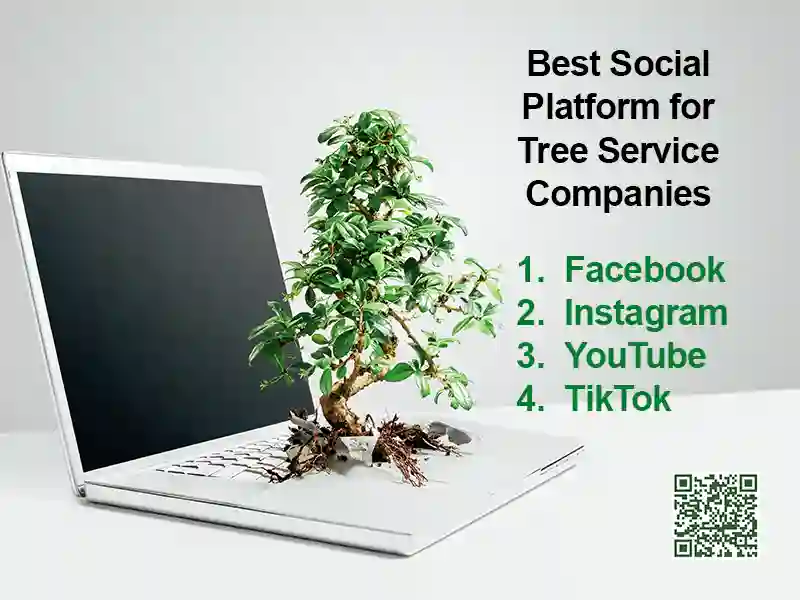
Facebook brings in 60-70% of social media leads for the tree companies we work with. Instagram brings maybe 20%. Everything else combined is under 10%. Those numbers have been consistent for three years across 30+ clients.
Why Facebook dominates for tree work? Local targeting. You can run ads to homeowners aged 35-65 within 15 miles who are interested in home improvement. Community groups. Every town has Facebook groups where people ask “anyone know a good tree service?” every single week. We’ve had clients book $8000 jobs from one professional response in a local Facebook group.
Before/after photos crush it on Facebook. Messy overgrown yard to clean professional work. That content performs every single time. Reviews are shareable. Screenshot a Google review, post it thanking the customer, instant social proof.
The downsides? Organic reach is declining. Facebook wants you to pay for ads. Video gets prioritized now over photos. If you’re only posting static images, fewer people see them. Younger homeowners under 35 don’t use Facebook as much anymore.
Who should use Facebook? Every tree company. If you’re only picking one platform, this is it. Post 3-4 times per week. Be active in local groups. Run a small ad budget even if it’s just $200 per month. This is your baseline.
Instagram gets engagement – likes, comments, follows. But here’s what we’ve found after years of testing. It converts to actual jobs at maybe half the rate of Facebook for tree companies.
People browse Instagram for entertainment. They’re not actively looking to solve their tree problems. They’ll follow you and like your posts for six months without ever calling.
Instagram works for younger demographics. Homeowners in their late 20s and 30s. First-time buyers. If that’s your target market, Instagram matters. Before/after swipe posts perform well. Stories and Reels get serious reach if you do short video clips.
But Instagram requires consistent high-quality visuals. If your photos are mediocre or you’re not posting regularly, it doesn’t work. You can’t post links easily except in your bio. Harder to drive website traffic.
We had a client with 2,000 Instagram followers getting maybe one call every two months from Instagram. Same client with 800 Facebook followers was getting 3-4 calls per month from Facebook. The numbers don’t lie.
Use Instagram if you’re already maxing out Facebook and want to expand. If you have someone who can manage it and takes good photos regularly. If you’re trying to build a younger customer base. Don’t use it if you’re struggling to keep up with Facebook. One platform done well beats two done poorly.
YouTube is the second-largest search engine. People search “when to remove a tree” and find videos. If your video is the answer, you’re the expert in their mind before they ever call you.
We have clients with tree removal videos from 2019 that still get views and generate calls every month. You create it once, it works for years. That’s powerful.
But YouTube takes actual work. Filming. Editing. Thumbnails. Descriptions. Each video is hours of work. Most tree company owners aren’t doing that or don’t want to.
Educational content works best. “How to assess tree health.” “When to remove versus trim.” Big dramatic removals. Showing complex crane work. You can’t teach anything meaningful in depth on other platforms. YouTube lets you go deep.
Growth is slow though. You won’t post 5 videos and suddenly have subscribers. It builds over months and years. And not every tree service content works. “We trimmed a tree today” videos get zero views.
Use YouTube if you’re willing to commit to 1-2 quality videos per month minimum. If you do complex or interesting work that looks good on video. If you want to build authority as the expert in your market. Don’t start unless you’ll stick with it. Five random videos over two years does nothing.
We’ve tested TikTok with a handful of clients. Lots of views. Decent engagement. Very few actual calls. People watch for entertainment, not to solve tree problems.
The demographic is extremely young. Most users are under 30. Many are teenagers who don’t own homes. Not your customer base for tree services.
TikTok might work for reaching first-time homeowners in their 20s who just bought a house with trees they don’t understand. The short format is easier to produce than YouTube. Algorithm can give you reach with zero followers.
But we haven’t seen proven ROI yet. One client got 50,000 views on a dramatic tree removal video. Got exactly two calls from it. That’s not a good return on the time investment.
Use TikTok only if you’re young, comfortable on video, and want to experiment. Don’t prioritize it over Facebook or Instagram. It’s an experiment, not a core strategy.
Most successful tree companies use one of these:
Facebook only – Post 3-4 times per week. Active in local groups. Small ad budget. Works for companies with limited time. This is the minimum viable approach.
Facebook + Instagram – Most common. Facebook for community and ads. Instagram for visual brand building and younger demographic. Requires more effort but covers most bases.
Facebook + YouTube – Best for authority building. Facebook for regular engagement. YouTube for in-depth expert content. Good for companies doing interesting work that looks good on video.
We don’t recommend more than two platforms unless social media is a major part of your strategy and you have someone managing it full-time.
Spreading too thin across four platforms and doing all of them poorly. Copying the same content across platforms without adapting it – what works on Facebook doesn’t work on TikTok. Focusing on follower count instead of leads – 5,000 followers who never call is worthless.
Inconsistent posting kills everything. Active for a month, silent for three months, active again. Doesn’t work. The algorithm punishes inconsistency and people forget you exist.
Not tracking which platforms actually bring in jobs. Every platform has analytics. If you’re not checking what works, you’re guessing.
We don’t put clients on every platform. We pick 1-2 that match their market and content capabilities. We create platform-specific strategies – same core content formatted differently for each platform.
Most clients start with Facebook. Add Instagram after a few months if Facebook is working. Add YouTube only if they’re serious about video. Almost nobody uses TikTok because the ROI isn’t proven for tree services.
Facebook typically shows results fastest – leads within 2-3 months. Instagram takes longer, more about brand building. YouTube compounds over time but starts slow.
If you want platform strategy without testing everything yourself and wasting months, contact Tree Service Marketing Solutions. We know what works for tree companies because that’s all we do. We’ve tested these platforms across hundreds of clients.
The best social media platform strategy is whichever one your customers actually use and you can commit to consistently. Usually that’s Facebook. Sometimes Facebook plus Instagram. Rarely anything else. Don’t overcomplicate it. Pick your platform, post consistently, show your work, engage locally. That’s what brings in jobs.